
Think about the relationship that’s been sitting on the back of your mind.
Yes, that one.
The one that comes back to you in the shower, on the drive, at 2 a.m. The one that rattles you more than it should, or exactly as much as it should, and you can’t tell which. Maybe it’s your marriage. Maybe it’s your mother, a business partner, the friend who somehow always leaves you feeling a little worse.
You’ve probably been told what that unsettled feeling means. “God’s using this to grow you.” “Iron sharpens iron.” “Marriage is meant to make you holy, not happy.”
Sometimes that’s true. And sometimes it’s the most dangerous half-truth a Christian woman can be handed.
The Stir Is Information
God uses the people around you to confront the things in you that He wants to work on.
The inner chaos you feel around a particular person matters. Whatever feelings they provoke in you, that’s what God is after. And the closer the relationship, the deeper the bump. A stranger’s rudeness rolls off. A husband’s contempt lands somewhere much deeper.
Those feelings tell the truth about your heart: your fears, your desires, your capacity to connect and to love. That’s real. And it’s worth paying attention to.
But here’s a thought for you: a perturbed heart tells you that something is wrong. It doesn’t automatically tell you where.
What Your Anger Is Telling You
The concept of anger is most often talked about in negative, trauma-oriented terms. And that idea, left half-finished, is exactly what gets handed to the woman who’s being harmed. “Your anger shows what you’re idolizing.” “Your hurt is about your expectations.” “Look at the log in your own eye.”
So she does. She looks and looks. She has probably examined herself more than anyone you know. She’s asked the question you’ve been asking about yourself for years. And the one thing nobody asks her to examine is the room she’s standing in.
Here’s what I’d say instead: anger tells you what matters.
If it didn’t matter, you wouldn’t be angry. Anger is the heart’s way of saying something I value is being threatened, ignored or violated. So the real question isn’t whether your anger is pointing at something. It always is. The question is what.
Sometimes it’s pointing at an idol. Something you’ve been finding your purpose, meaning, value or joy in, apart from God. Your image. Your control. Your need to be right, or to be needed. Your picture of the marriage you were supposed to have. When that gets threatened, the anger is real, and it’s worth an honest look.
And sometimes it’s pointing at something written on your heart. Things God put there as good, right and true: connection, beauty, justice, honesty, safety, being known. You don’t get angry when those are violated because you idolize them. You get angry because you were made in the image of a God who loves them too.
Jesus got angry. He “looked around at them in anger, deeply distressed at their stubborn hearts” when religious men cared more about their rules than a man’s withered hand (Mark 3:5). That wasn’t an idol. That was love, refusing to look away.
Scripture doesn’t say don’t be angry. It says “In your anger do not sin” (Ephesians 4:26). Anger isn’t the sin. It’s the signal. Anger is not a contaminant. Sometimes it’s the most honest thing in the house.
So here’s how the perturbed heart actually works: sometimes the stir is revealing something in you. And sometimes it’s revealing something wrong in the room. The perturbed heart isn’t always the problem. Sometimes it’s the alarm.
“Iron Sharpens Iron”
This one gets quoted to keep you in place more than any other verse. So let’s actually read it.
“As iron sharpens iron, so one person sharpens another.” (Proverbs 27:17)
Notice: both pieces are iron. Both are being sharpened. Sharpening is mutual, and it’s done with care, at an angle, so the edge comes out better.
If you’re the only one in the relationship expected to change, grow, soften, examine and repent, that isn’t sharpening. It’s grinding. And grinding doesn’t produce an edge. It just wears you down to nothing.
“Holy, Not Happy”
You’ve probably heard this one at a marriage retreat: marriage is meant to make you holy, not happy.
There’s something true in there. Marriage will stretch you. Any close relationship will.
But notice how the line gets used. It’s almost always aimed at the person who’s suffering, never at the person causing it. And it quietly assumes that your pain must be producing holiness, simply because it hurts.
Pain doesn’t sanctify you on its own. A refiner’s fire burns away what doesn’t belong and leaves the gold more itself. It doesn’t melt the gold down until there’s nothing left.
Holiness was never the opposite of connection. And God never asked you to mistake your own erasure for sanctification.
Refining or Harming: How to Tell the Difference
You know a relationship is abusive because you’ll feel it as death to your soul. That’s the truest test I know. But if you’ve lived in the fog for a long time, it helps to have a few more.
A refining relationship: – Unsettles you, but leaves you more yourself over time.
- Is mutual. They’re being stretched too, and they know it.
- Lets you name what’s wrong, and you’re actually heard.
- Welcomes your growth, even when it inconveniences them.
- Has tension that goes somewhere: repair, understanding, change.
A harming relationship: – Leaves you smaller every year. Quieter, more careful, less sure of your own mind.
- Puts all of the growing on you.
- Makes things worse when you name what’s wrong. – Punishes your growth, or mocks it.
- Has tension that never resolves, because the tension is the point.
If you’re reading the second list and recognizing your life, it’s worth learning what actual harm looks like when nobody’s raising a hand.
The Facade Cuts Both Ways
You can live out a great-looking version of yourself without addressing what’s underneath, at least for a while. But a facade carries the deep, subconscious fear of being found out. It unravels under pressure, or in the private moments when you think no one is watching.
Some of the most convincing facades I’ve seen belong to good Christian women who are fine. Smiling in the church lobby. “We’re just in a hard season.” Hiding behind a facade of a marriage that is quietly killing them, because telling the truth feels like failure.
God is after your integrity: not just authentic living regardless of who’s watching, but integrity grounded in His grace and mercy. Integrity means the inside and the outside match. Sometimes integrity looks like finally telling the truth about the relationship, not just about yourself.
Before You Stay, or Before You Go
These are the steps I’d walk through with any woman sitting across from me, whichever way she’s leaning.
- Pay attention to the tension. What is this bumping up in you? Why are you rattled? Write it down, as it happens. Your memory will be pressured to revise it later. Trusting your own read starts with keeping a record of it.
- Name the emotion, then ask where it’s pointing. Is this feeling pointing at something in me that God wants to grow? Or is it pointing at something being done to me that God never asked me to accept? Both questions are fair. Only asking the first one is how good women stay in bad places.
- Ask what your anger is protecting. Anger tells you what matters, so ask God plainly: what matters so much here that I’m this angry? Then sort it honestly. Is it something I’ve been finding my worth in apart from You: my image, my control, my picture of how this was supposed to go? Here are options to think about: yourself, your relationship, your marriage covenant. That last one matters. Sometimes the idol is the marriage itself, kept intact at any cost. Or is it something You wrote on my heart as good, right and true: connection, honesty, justice, safety? The first kind asks you to let go. The second asks you to stand up. And ask one more question: what have I been asked to tolerate in Your name?
- Practice a new response. Fight the urge to react the way you always have, and lean hard into the Holy Spirit’s guidance instead. Become a conduit of God’s grace and truth, which includes wisdom and good boundaries. Grace without boundaries isn’t grace. It’s access.
- Let it be their choice to walk away. Invite them into a better relationship, with boundaries that don’t tolerate inexcusable behavior toward you. Then let them choose. Holding that line is a consequence, not a punishment. It is free will, their own choice to stay engaged, that makes the relationship meaningful. That’s the same principle underneath what biblical submission actually means. A relationship held together only by your effort was never really a relationship.
And if they do choose to grow, you’ll see it in behavior, over time, not in a single emotional conversation. Here’s what real change looks like.
If being honest about the relationship would make you less safe right now, start with steps 1 through 3 privately. A journal, a counselor, one trusted friend. You don’t have to announce anything to begin seeing clearly.
So Here’s the Deal…
I believe it’s better to have grown in wisdom and depth than to have made your life easier by cutting off everyone who rubs you the wrong way. Hard people can grow you. Some of them will.
But wisdom also means knowing the difference between a bump and a blow.
Your perturbed heart isn’t your enemy, and it isn’t always your fault. It’s a messenger. Sometimes it’s telling you something about yourself that God wants to heal. Sometimes it’s telling you something about the relationship that God already sees.
You’re allowed to listen to both.
The perturbed heart isn’t always the problem. Sometimes it’s the alarm.
Stand firm in what you know. And let the people who want to stay choose to.
Next Steps
- Tools for Healing: my guided journal for women healing from emotional and narcissistic abuse. Nine chapters and 36 questions, rooted in faith and written to be lived with slowly. A good place to start sorting out what the stir in your heart is actually telling you. Instant download.
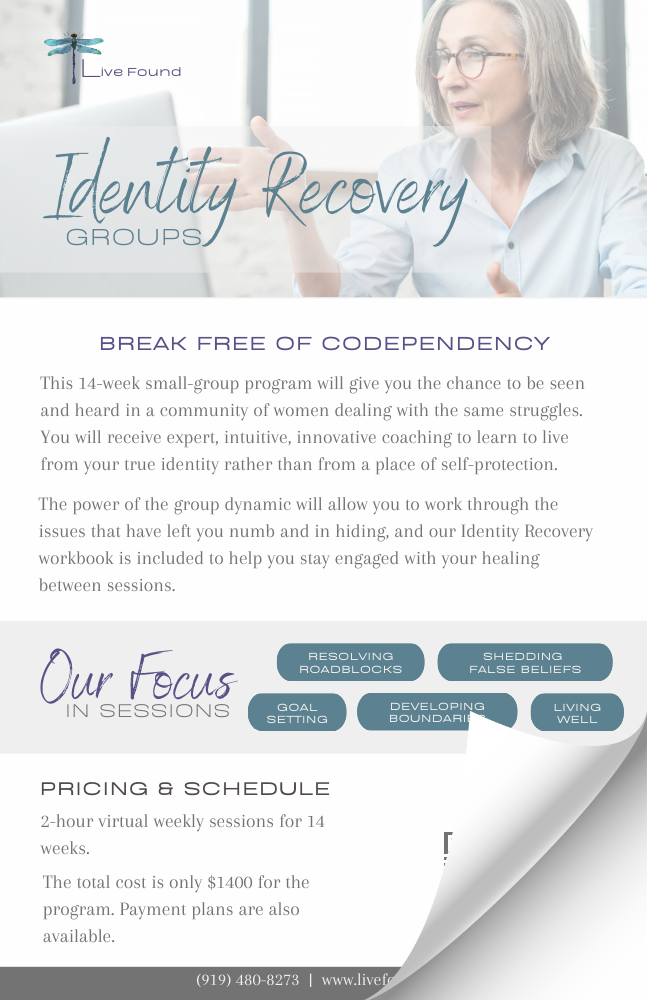
- Identity Recovery Groups: a small group of women who can tell the difference between refining and grinding, because they’ve lived it. Small on purpose.
- One-to-one coaching with me or Identity Recovery Coach Lauren Rose, when you want someone to help you read the room you’re in: booking portal.
Find yourself. Keep yourself.
About the author. Sharmen Elaine Kimbrough is an identity strategist and the founder of LiveFound, Inc. She holds a Master’s degree in professional counseling and spent more than ten years developing and leading the women’s programs at the Marriage Recovery Center. She writes for women recovering a self after emotional abuse, coercive control, and spiritual bypassing. More about Sharmen →