
Has God ever asked you to do something that you thought was absolutely insane?
I don’t mean quite as insane as building an ark when no one had ever seen rain. Or walking into a hungry lion’s den. Or offering up your only son, in seeming direct contradiction to the promise of a long legacy.
But maybe it was something that made you feel like you were going to look stupid or foolish. Something counter-intuitive, contrary to what everyone around you believed. Something that would put you in a place where you could stand on nothing but God’s goodness, with the outcome utterly out of your control.
The question is: did you do it?
What did people call you when you started to?
You Already Know the Word
For some of you, “crazy” is not a new word.
You’ve been called crazy for years. Too sensitive. Overreacting. Unstable. “You need help.” “Nobody else sees it that way.” Said calmly, repeatedly, until it stopped sounding like an accusation and started sounding like a diagnosis.
So when you finally start to consider the brave thing (the counselor, the separate account, the business, the honest conversation with your pastor, the no), the word gets there before you do. It’s already installed. And it fires the moment you move.
That’s worth knowing, because it means the loudness of “crazy” tells you nothing about whether the step is wrong. It only tells you how long you’ve been hearing the word.
“Crazy” Is the Word People Use for the Step That Costs Them Something
Noah looked crazy. So did Daniel, and so did Abraham.
And Jesus? Jesus was pretty disruptive. And to whom? The church people.
He healed on the wrong day. He ate with the wrong people. He let a woman interrupt a dinner party with perfume and tears, and defended her when the people at the table called it a waste. The loudest objections He faced didn’t come from the unbelievers. They came from the people whose system His freedom inconvenienced.
That pattern hasn’t changed.
Notice who calls your step crazy. Very often it’s the people who would have to adjust if you took it. The husband who’d lose your automatic availability. The family that prefers the version of you who keeps the peace. The church that would rather not have the conversation.
“Crazy” is frequently just the word for “costly to me.”
“Surrender Control”: to Whom?
When I first wrote this post, I said the hard part is confronting our prideful need to feel in control of our circumstances. I still believe that. The lie we all like to believe is that we can control our destiny, and God has a way of letting the events of our lives shatter it.
But I’ve sat with too many women since then to leave it there.
Because there’s a second lie, and it’s the one that’s been told to you: that giving up control means handing it to whoever is loudest.
Surrender to God has been translated, in a lot of homes and a lot of churches, into surrender to him. Stop managing. Stop deciding. Stop wanting. Let him lead. And anything you do on your own initiative gets called pride, rebellion, or yes, crazy.
That isn’t surrender. It’s a transfer of ownership.
Trusting God with the outcome is not the same as abandoning your own conduct. Scripture asks you for self-control, not spouse-control: governance of the one life you were given. You can release the ending to God and still take responsibility for your next step. In fact, that’s exactly what faith looks like in the stories we tell our children.
Noah didn’t wait for the rain before he picked up a hammer.
Abigail Looked Crazy Too
There’s a woman in Scripture almost nobody hands to women like you. I think it’s because she’s inconvenient.
Her name is Abigail, and you’ll find her in 1 Samuel 25.
She’s introduced as “an intelligent and beautiful woman.” Her husband, Nabal, is introduced as “surly and mean in his dealings.” (Scripture doesn’t soften him.) When Nabal insults David and puts his entire household in danger, Abigail doesn’t ask permission. She loads the donkeys, rides out to meet an armed man, and takes the situation into her own hands.
And the text says this, plainly: “But she did not tell her husband Nabal.” (1 Samuel 25:19)
By every rule you’ve probably been taught, that’s rebellion. Undermining her husband. Going behind his back. Crazy, dangerous, and unsubmissive.
Here’s what David says to her when she arrives:
“May you be blessed for your good judgment and for keeping me from bloodshed this day.” (1 Samuel 25:33)
Good judgment. Not rebellion. Not pride. Not crazy.
Scripture had every chance to scold Abigail and didn’t. It honored her discernment and her nerve. And it let her story stand as evidence that a wise woman acting to protect life is not out of line with God. She’s in step with Him.
How to Tell Crazy from Courageous
Of course, not every bold idea is a calling. Sometimes the step really is a bad one. So here’s a test you can run on the thing you’re considering, before you ask anyone else’s opinion.
1. Is it moving toward life, truth and freedom, or away from them? Courageous steps usually move toward something: honesty, safety, growth, a self you can recognize. Crazy steps usually move away: from truth, from accountability, from the people who actually love you.
2. Who’s calling it crazy, and what does your staying the same give them? This isn’t about assuming bad motives. It’s about weighing the source. An objection from someone with nothing to lose is worth more than one from someone whose comfort depends on your answer.
3. Does it cost you your integrity, or only your comfort? This is the one that settles it most often. Courage costs comfort. Crazy costs integrity. If the step requires you to lie, manipulate, or become someone you’re not, stop. If it only requires you to be uncomfortable, misunderstood, or brave, that’s not a warning sign. That’s the price of the ark.
Then do one more thing: say the step out loud to one person who has no stake in your answer. Not a panel. One person. Watch what happens to the word “crazy” when it’s said in daylight to someone who isn’t invested in you staying the same.
You’ve spent a long time outsourcing your own read on things. This is how you start taking it back.
If I’m the Crazy One
Here’s where I’ve landed after all these years.
If I’m the crazy one for believing God meant it when He called me whole, for refusing to keep calling harm “just a hard season,” and for walking out of a system built to keep me small…
Then I’m owning it. And I’m finding other crazies to have adventures with.
That’s not a joke, exactly. It’s a strategy. Brave steps are much easier to take in company. The woman who’s been told she’s crazy for twenty years needs a few people around her who hear her story and say, “No. You’re courageous. Keep going.”
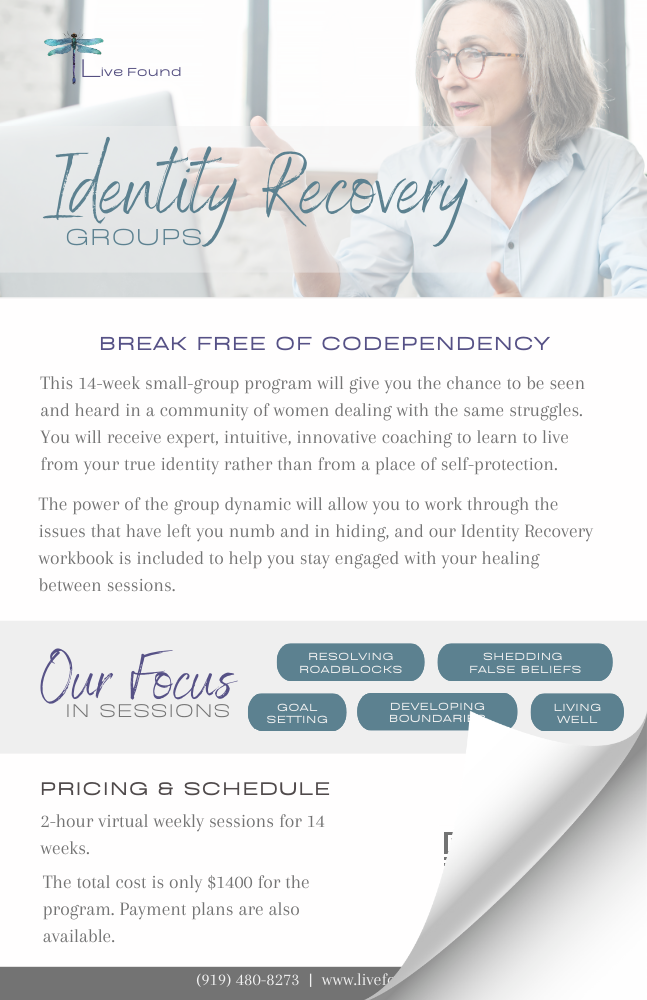
That’s what our Identity Recovery Groups are, frankly: small rooms full of women who were called crazy and turned out to be right.
The Next Right Step in Your Story
The Lord speaks to us with purpose. The real story is about Him and His power to redeem all things to Himself. He doesn’t need our help to make the story come out right.
But don’t mistake that for “your part doesn’t matter.” You’re not a spectator in a story He’s writing about someone else. He writes with living people, and He has always handed them a next step. Build the boat. Walk into the den. Load the donkeys.
What a privilege to walk out your story freely, trusting Him with the ending and owning your next move, so your life becomes a picture of redemption and grace to the people watching. Including the ones who called you crazy.
Next Steps
- Tools for Healing: my guided journal for women healing from emotional and narcissistic abuse. Nine chapters and 36 questions, rooted in faith and written to be lived with slowly. It’s the place to work out your next right step on paper before you take it. Instant download.
- Identity Recovery Groups: other “crazies,” doing this together. Small on purpose.
- One-to-one coaching with me or Identity Recovery Coach Lauren Rose, for when you want someone in your corner for the brave step itself: booking portal.
Find yourself. Keep yourself.
About the author. Sharmen Elaine Kimbrough is an identity strategist and the founder of LiveFound, Inc. She holds a Master’s degree in professional counseling and spent more than ten years developing and leading the women’s programs at the Marriage Recovery Center. She writes for women recovering a self after emotional abuse, coercive control, and spiritual bypassing. More about Sharmen →