
Overcoming Stubborn Pride: Evaluating Your Position for Growth
If you are unwilling to evaluate where you are, you’re probably in the wrong place. Unwillingness shows pride, fear, and complacency. Any of which are insidious distractions from living life well.
The Role of Pride in Hindering Growth
Pride keeps us from admitting our own foolishness, mistakes and errors in judgment. Also, it makes us cling to our own selfishness, which then leads us into even more errors in judgment. We’re unwilling to admit we got ourselves stuck, and yet we try getting unstuck by staying right where we are. In effect, We run from whatever bitterness or pain we’re simultaneously clinging to, unable to admit that control is a fallacy and God’s way might actually be best.
The Paralyzing Fear of Change
Fear of being alone won’t let us tolerate getting rid of toxic relationships simply because, at least, there’s a relationship. We fear that even building good boundaries to protect ourselves from toxicity will leave us alone and unloved. Exposure seems terrifying, though to carry on being in the wrong place heading the wrong direction will bring more devastation than exposure would. We keep pointing our fingers at everyone else, without taking any responsibility for our own position—the position we put, and leave, ourselves in.
The Complacency That Stagnates Progress
Complacency ties the pride and fear together in a hopelessly bound knot. You just don’t care anymore, so you plug along doing what you’ve always done.
The Importance of Self-Evaluation
I’ve worked with a lot of people who didn’t want to look at where they’d parked. That reluctance was almost always a preview of how far we’d get together.
But in all my years doing this work, I have never once heard someone say they regretted taking an honest look.
Questions to Break Free from Stubborn Pride
Here are some questions you can use to get started. They might be just the thing to get you out of the rut you’ve been in. Maybe their purpose is to open your eyes to danger ahead. If nothing else, they will help deepen your relationships with the people around you.
Evaluating Your Spiritual Life
Where are you spiritually? Where is your heart with God? Are you holding onto bitterness or unforgiveness anywhere? Is there anything you are arguing about with Him? What are you doing to develop your relationship with Him?
Assessing Your Marital Relationship
Where are you with your spouse? Is there something you’re allowing to fester? Are there things you’ve pushed under the rug that really should be talked about? Are you perpetuating or tolerating anything that dishonors God’s reflection in your marriage? What is the level of mutuality, freedom and reciprocity in authenticity, transparency, and curiosity? How able are you to collaborate on building this life together as something you both love being a part of?
Reflecting on Your Relationship with Your Children
Where are you with your kids? Is there brokenness in your relationship that you need to address? In what ways have you shut them down and shut them out? What do you need to do to speak life into their hearts? How are you training them to think, evaluate, and choose wisely, rather than simply, mindlessly, obey?
Analyzing Your Friendships
What are your friendships like? Are their own lives of the quality heading in a direction you’d like to be? Are there toxic relationships you need to back away from in order to grow in what God is calling you to? Do your relationships put an unhealthy wedge in your spiritual life or your marriage?
Identifying Your Habits and Addictions
What are your habits? Your addictions? What are the strongholds of your life? What is sapping your energy and stalling your ability to love and live well? What is distracting, demoralizing, exhausting or consuming you?
These questions aren’t meant to shame you — they’re meant to wake you up. If working through them surfaces more than you expected, it’s a sign you’re finally telling yourself the truth. If you want a guide for that process, this is exactly the work we do together in 1:1 coaching.
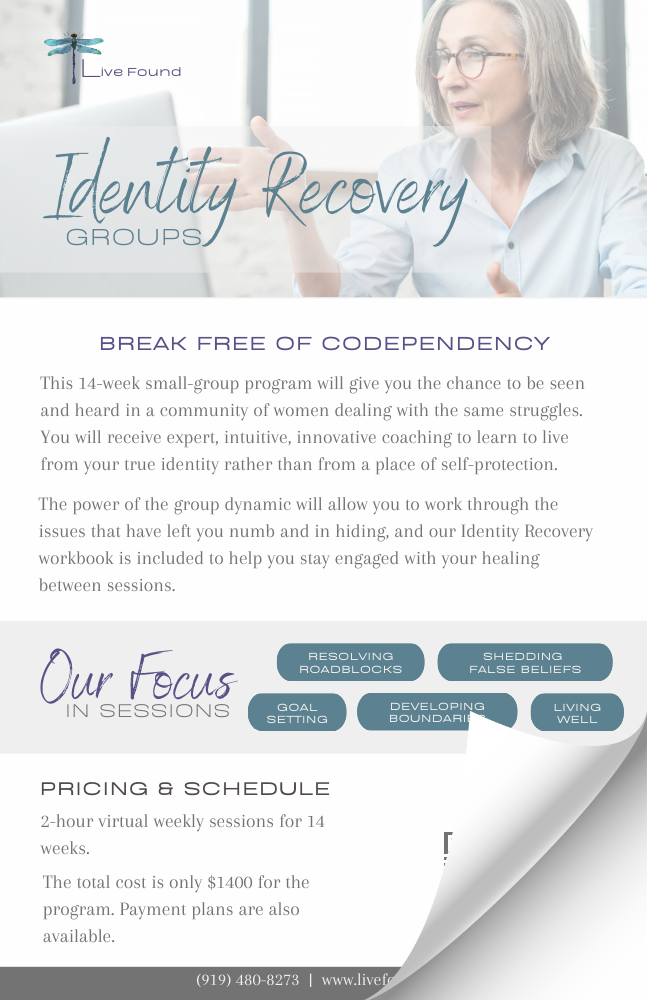
This is also exactly what the boundaries course was built for — not scripts to win arguments, but the framework underneath them. And if you would rather not practice it alone, the Identity Recovery Groups are women doing exactly this, together.
About the author. Sharmen Elaine Kimbrough is an identity strategist and the founder of LiveFound, Inc. She holds a Master’s degree in professional counseling and spent more than ten years developing and leading the women’s programs at the Marriage Recovery Center. She writes for women recovering a self after emotional abuse, coercive control, and spiritual bypassing. More about Sharmen →